How to build a 30-day Deriv partner content calendar to drive FTTs
Get a complete 30-day content calendar designed to move financial leads from demo setups to their first funded trade on Deriv.
A content calendar is a planned schedule of posts, videos, and messages designed to move an audience from first contact to a specific action — in this case, making their first trade on Deriv. Without a calendar, most partners post inconsistently, lose momentum, and miss the window when a lead is most likely to convert.
This article gives you a ready-to-use 30-day calendar built specifically around Deriv's products and platforms, structured around one goal: generating consistent First Time Traders (FTTs). Each week has a clear purpose, every content angle is Deriv-specific, and a review framework at the end tells you whether month one worked and what to change for month two.
Quick summary
- An FTT (First Time Trader) is a referred client who registers a real account, completes a deposit, and executes their first funded trade on Deriv. This specific transaction serves as the fundamental conversion metric that triggers partner commissions within the platform's revenue share and turnover models.
- A 30-day calendar moves leads through four stages: Awareness → Education → Trust → Conversion. Generic content skips stages; this calendar doesn't. The content angles below are Deriv-specific — they position you as someone with first-hand platform knowledge, not just a general finance account.
- The content angles below are Deriv-specific — they position you as someone with first-hand platform knowledge, not just a general finance account.
- Your Deriv partner dashboard gives you one referral link. Track which channel is performing by keeping a simple log: note where you posted each day and compare it against the sign-up and first time trader counts in your dashboard at the end of the month.
- At the end of 30 days, use the review framework in this article to diagnose what worked and what to change.
Key terminology
FTT (First Time Trader) — a referred client who opens a real account and places their first funded trade on Deriv. This is the conversion event that triggers commission in most partner models.
Content calendar — a planned schedule that assigns a specific post type and purpose to each day, ensuring your content moves leads through a defined funnel rather than posting at random.
Conversion funnel — the journey a lead takes from first seeing your content to becoming an FTT: Awareness → Education → Trust → Conversion.
Referral link — your unique Deriv partner URL that attributes sign-ups and trades back to you. Every piece of conversion content should include it.
High-intent moment — the point when a lead is actively researching whether to start trading. Content that meets them here (e.g., "how to open a Deriv account") converts at a significantly higher rate than general awareness posts.
How does the Deriv partner conversion funnel work?
Posting randomly generates followers, not traders. The relationship works like this:
Awareness post → lead enters your audience → educational post → lead understands trading → trust post → lead believes Deriv is right for them → conversion post → lead clicks referral link → FTT
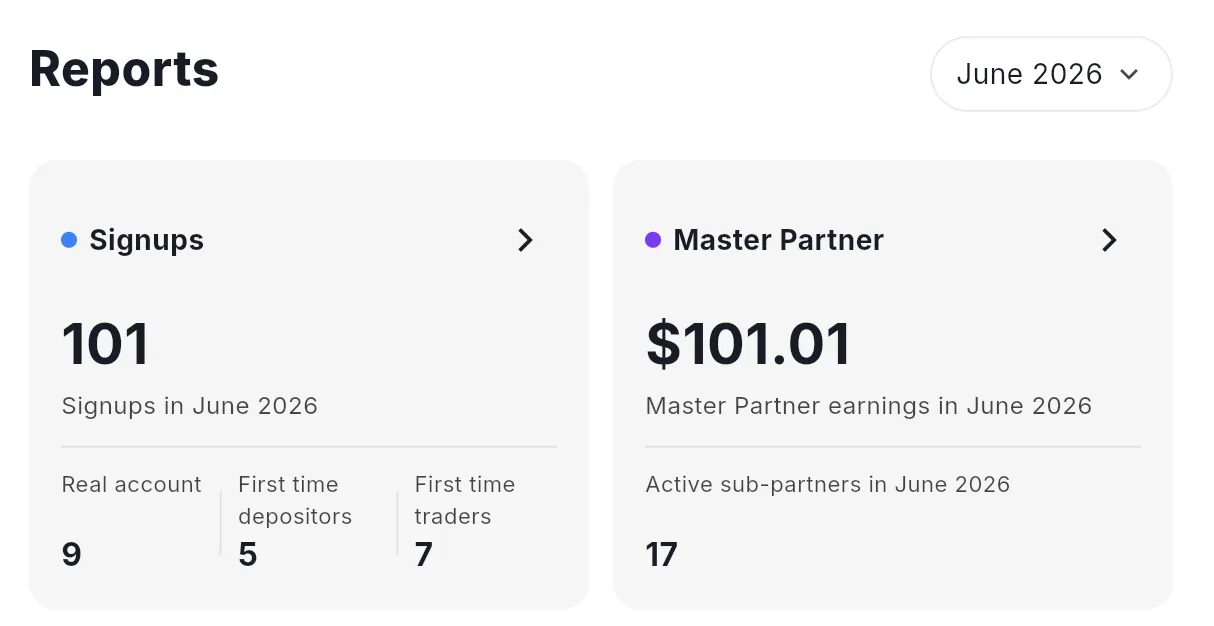
Illustrative figures only — not verified or representative of typical earnings.
Each stage has a drop-off rate. This structured calendar reduces drop-off at every step by sequencing content in the right order, using Deriv-specific angles that make your content credible — not interchangeable with any other broker's affiliate programme.
How do you adapt your content for cold vs. warm trading audiences?
This calendar is designed for partners who already have an audience — a WhatsApp group, a Telegram channel, a Facebook community, or a social media following that includes people open to financial content.
- Warm audiences: If your audience already follows you for finance or trading content, you can move faster. Spend less time on Week 1 and more on Weeks 2 and 3.
- Cold audiences: If your audience is a general lifestyle or community following, do not skip Week 1. Your leads need more time at the awareness stage before any Deriv-specific content will land. Run two weeks of awareness before moving to education.
The 30-day content framework
Before you start: Set up your tracking assets
- Log in to your Deriv partner dashboard and copy your referral link from the home page. You'll see it under "Your referral link" — choose the Revenue Share or Turnover version depending on your commission plan.
- Choose your primary channel — the one where most of your audience already is. Run the full calendar there first.
- Create a simple tracking sheet: date, post type, channel. Note the day you post anything with your referral link. You'll cross-reference this against your dashboard data at the end of the month to understand which channels drove your sign-ups.
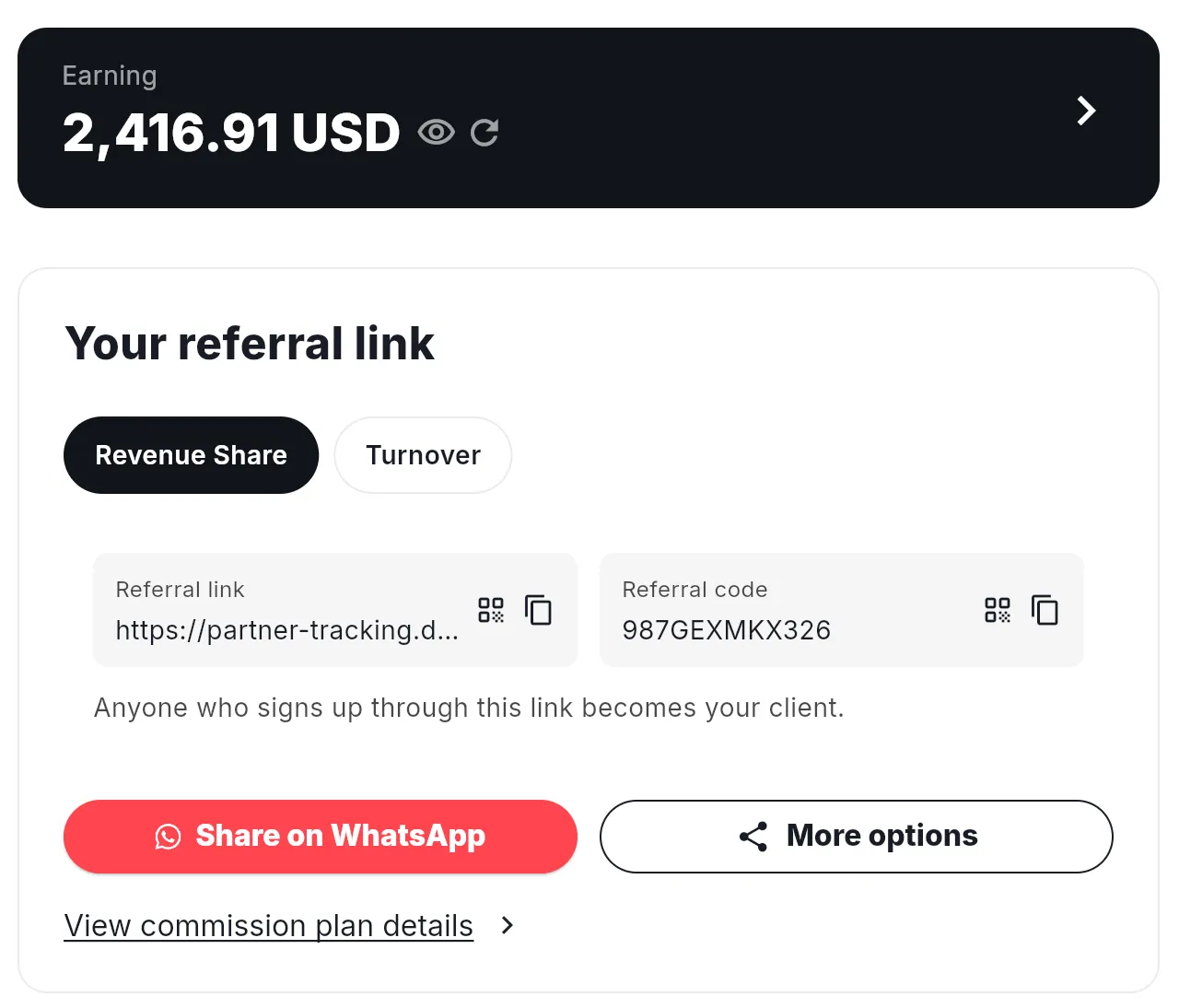
Illustrative figures only — not verified or representative of typical earnings.
Week 1 — Awareness: establish your Deriv credibility
Tip for Day 03: Reply personally to everyone who responds that they "don't know where to start." Note their names for customised follow-ups in Week 4.
Week 2 — Education: teach them the Deriv basics
Referral link placement: Embed your specific demo sign-up link on Days 08 and 09 to capture soft conversions early.
Week 3 — Trust: reduce the hesitation between demo and real
On Day 17, explicitly clarify that trading involves significant capital risk. Explain that risk tools like stop-loss and negative balance protection exist to manage, not eliminate, losses.
Week 4 — Conversion: converting your warm audience into FTTs
Day 26 operational rule: Supplement your channel broadcast with targeted personal messages sent directly to individuals who engaged during Weeks 1, 2, and 3.
How do you run an end-of-month review to evaluate your calendar's performance?
At the close of 30 days, cross-reference your tracking sheet against the real-time conversion analytical reports inside your dashboard.
Step 1: Pull your numbers from the Deriv partner dashboard
Log in to partners.deriv.com and review the primary metrics cards under your Reports interface:
- Signups: Total users registered via your referral tracking code.
- Real Account: Users who advanced from a demo space to real account verification.
- First Time Depositors: Accounts that successfully completed an initial funding pass.
- First Time Traders (FTTs): Users who completed their first funded market transaction.
Step 2: Identify where your leads are dropping off in the partner conversion funnel.
- High Signups, Low Real Accounts: Leads are stalling inside the demo space.
- Fix: Inject heavier Week 2 variations detailing the distinct tools unlocked exclusively via live accounts.
- High Real Accounts, Low Depositors: High frictional trust deficit during funding.
- Fix: Build localised walkthrough videos or breakdowns showing how simple, secure, and accessible your local deposit methods are.
- High Depositors, Low FTTs: Users have funded accounts but hesitate to open an actual position.
- Fix: Provide direct, step-by-step walkthroughs of an initial trade setup on Deriv MT5.
- Flatline Analytics Across the Board: Audience lacks clear intent or the total pool size is insufficient.
- Fix: Double the duration of your Week 1 awareness phase to warm up the cold pool before presenting platform features.
For partner marketers, consistency also builds the repetition needed for a lead to act: research on trader behaviour consistently shows that most people need seven or more touchpoints before converting. A 30-day calendar delivers those touchpoints in the right order, and the review framework above ensures each month's effort feeds into the next.
A 30-day content calendar can work because it turns your referral link from a static URL into an active funnel. Each post does a specific job — building awareness, teaching a Deriv concept, reducing hesitation, or making the ask — and together they move a lead from first contact to first trade in a structured, repeatable way. Run month one, complete the end-of-month review, and use that data to refine month two. The goal is not a perfect first month; it is a system you can diagnose and improve.

Quiz
FAQs