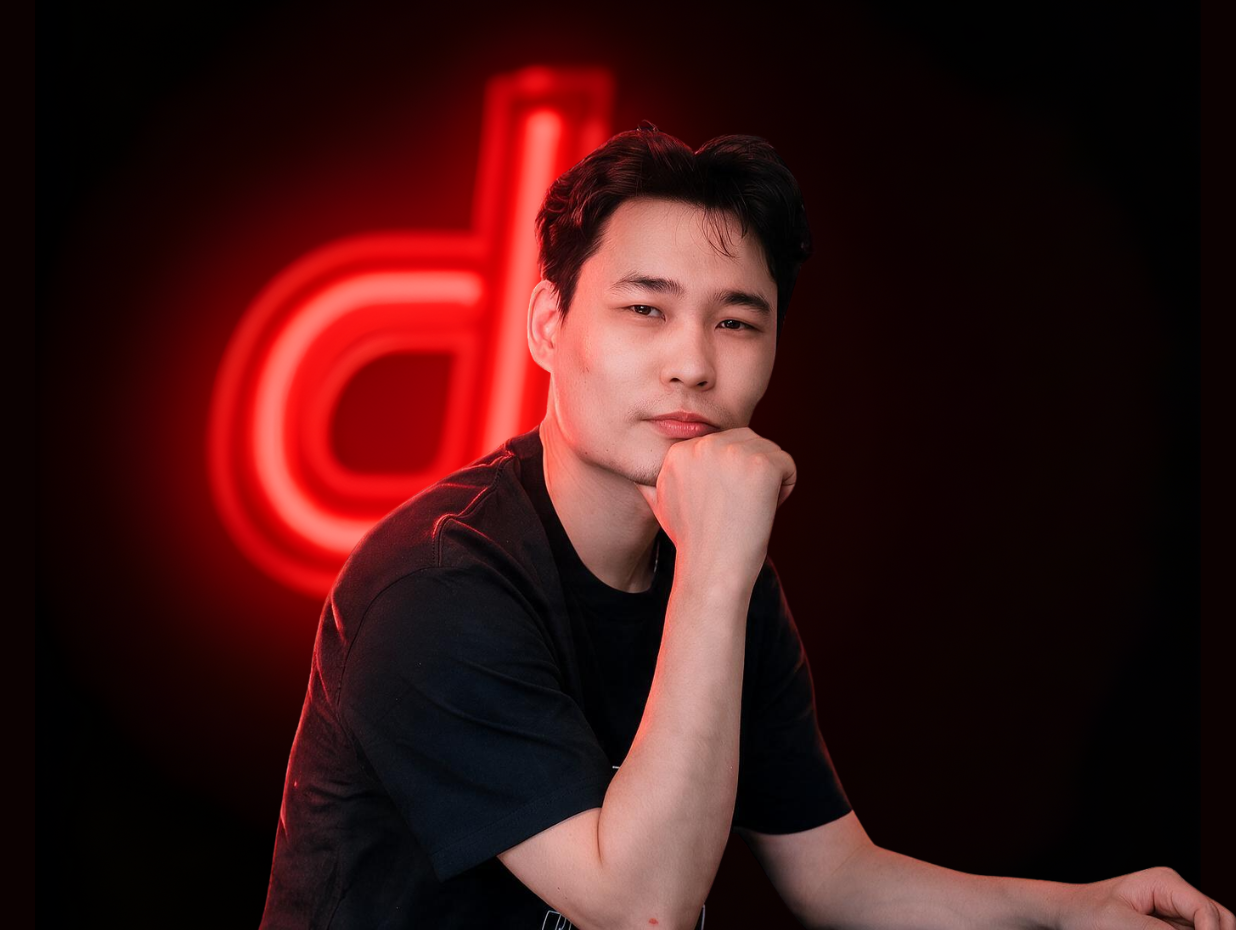
When Tur first came across synthetic indices in 2020, almost nobody in his region had heard of them. Five years later, he leads a community of around 3,000 traders, runs a dedicated hub office celebrating its first anniversary, and is one of the most recognised trading educators in the country.
His path there wasn't smooth. Years of losses in traditional Forex trading taught him the lesson that now anchors everything he teaches: consistency outperforms intensity.
Quick summary: what makes Tur's approach to Synthetic Indices trading different?
- The instrument: Synthetic Indices - markets that run 24/7 and aren't disrupted by news events or macro shocks, unlike the Forex pairs he traded before joining Deriv.
- Tur's core lesson: Learn the basics thoroughly before risking real money. Beginners who approach trading without discipline, chasing fast profits, are the ones who lose the most.
- His community model: Education first. He spent time studying synthetic indices deeply and building his own communication skills before trying to teach anyone else.
- His signal process: Every signal follows a fixed sequence - market structure, price action, technical analysis tools like Fibonacci - and comes with a clear entry, never a guarantee.
- The turning point: a physical office where his team could come together to trade with Deriv and grow side by side.
Why are traders switching from Forex to Synthetic Indices?
Tur's trading journey started in 2016, when he began studying the Forex market seriously. It did not go smoothly.
"When I first started, this thing called Forex was really difficult. I lost a significant amount of money, experienced ups and downs, and made a lot of mistakes," he says. "But I didn't give up on it, not even once."
Trading with other brokers, he found that sudden news events could trigger sharp volatility that wiped out capital with little warning. That experience shaped what he looked for next.
He was introduced to Deriv in 2020, and Synthetic Indices changed the equation. "The advantage of this over other brokers is that it works 24/7," he explains, “a market structure driven by its own statistics rather than by news cycles or central bank announcements.” Over eight years of trading experience, he says the throughline has been simple: "If I were to summarize my entire story, it was all about consistency."
How Tur grew a Synthetic Indices trading community when not many in his region had heard of them
When Tur started researching Synthetic Indices in 2020, he was working against a near-total information gap. "Most people in the region didn't really know what Synthetic Indices were," he says.
Rather than launch a community immediately, he treated the groundwork itself as the first project. "I first dedicated time to studying Synthetic Indices, improved my communication skills, and then helped others gain a clear understanding of what synthetic indices are."
That sequencing, depth before reach, is what lets the community scale. Today it stands at roughly 3,000 traders, and a year ago Tur opened a physical hub office where members can trade together in person, an anniversary he's now preparing to mark.
What should beginner Synthetic Indices traders know before their first trade?
Education is the backbone of Tur's own approach: "For me, learning the basics properly before I started trading was one of the things that made the biggest difference," he says, reflecting on his own early mistakes in Forex.
The mistake he sees most often is people trading without a clear strategy, relying on guesswork instead of preparation and rushing to make large amounts of money in a short window. Traders chasing quick wins take on outsized risk and can lose far more than they intended. Tur describes his own trading as the opposite of that: systematic, long-term, and deliberately unhurried.
What criteria does a trusted Synthetic Indices trader use before sending a signal?
Tur has built a following around his signals and market analysis, and he treats the process as a discipline rather than a hunch.
"Before sharing a signal, I first perform an analysis. I look at the market structure, then carefully look at the price action and my own trading methods, like Fibonacci." Only once he has a clear confirmation does he send an entry point to his community.
He's careful about the limits of what a signal can do. ""A signal reflects my own analysis at that moment - it's never a 100% probability or a guarantee of a win," he says. Tur is clear that a signal reflects his own analysis, not a guarantee - he says it's up to each trader to apply their own risk management and judgement alongside it.
Can the Deriv Partnership Programme support Synthetic Indices education and community growth?
Tur points to a specific moment as the real inflection point in his partnership: Deriv's support when he opened his trading community office.
"Deriv really stepped up, supported us in establishing a physical presence, and invested in our vision, and that support became the definitive turning point for us as partners." From there, he says, the office let him bring talented new people into the workspace to trade together every day, turning an online following into a working team.
He's also been an active participant in Deriv's partner events, both in his region and abroad. "I really like how we can share ideas with each other - discussing how we're moving forward with our communities" he says, and values the direct line to the Deriv team: a chance to raise issues from his clients and get them addressed. One event in particular stands out in his memory as simply one of the best he's attended.
What advice would an experienced Synthetic Indices trader give to aspiring Deriv Partners?
When asked what he'd tell someone thinking about partnering with Deriv, Tur skips straight past commission structures.
"For me, it was never about the commissions provided by Deriv - I focused on earning people's trust first," he says. "I found that when I put effort into training, advice, and signal services, and kept people around, the commission followed on its own."
He's seen the alternative play out with other platforms: brokers that pay out in the short term but prove unreliable over time, eroding the trust that keeps partners and clients around. His formula is the opposite bet - slower, but built to hold. It's a slower process, but it's steady.
What is the future of Synthetic Indices trading and education in his region?
Looking ahead, Tur's goals split into two tracks. As a trader, he wants to become more recognised and continue building his personal brand. As a partner, he wants to keep working closely with the Deriv team, host more impactful events, and grow an even more vibrant community.
"My main goal has always been to stay consistent in the long term, not the short term. That's it." - Tur, Deriv Top Partner.
Articles in this section